Wednesday, August 30, 2006

we're back!

Vinalhaven was as lovely as ever. I wish we could stay as long as our neighbors there do ("until it gets too cold to sit on the toilet seats"), but I haven't been at my job long enough to push for working from afar and grudgingly returned home on Monday. It's really difficult to get to the island — the Maine State Ferry will only let you make a reservation for your car exactly 30 days in advance, and then only reserves spots for 4 cars on each ferry, which means that unless you are mindful of dates and adept with speed-dial you need to put the car in line the day before you want to take the ferry. The process for returning is a bit more of a hassle (!); if you don't have a reservation someone needs to get the car in line the night before around 3 or 4 a.m. and wait for the woman to come out of the office at 5:30 with her clipboard and assign you a number. This process, along with the fact that there's no cell phone service on 99% of the island and there is an active land trust organization to keep a sharp eye on development, seems to do a good job of keeping away the sort of people one goes to Penobscot Bay to get away from.

We rented the same cabin that we did last year. It's down a dirt road and surrounded by water on three sides, with no other houses visible except for distant farmhouse. We hiked a lot, and we spent a lot of time sitting on the deck drinking wine and watching the birds (osprey, bald eagles, kingfishers, a few others). There's not much else to do there if you're not a lobsterman and that's fine with us.

looking West from the Lane's Island bridge

looking West from the bridge on the way to Lane's Island nature preserve

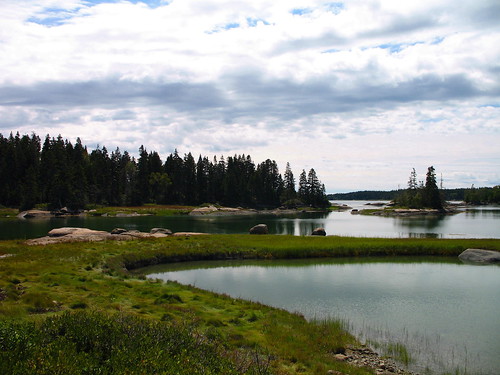
a view from the trail at Lane's Island nature preserve

a view from the trail at Lane's Island

Seal Bay

the hiking trail in the Huber Preserve brings you to Seal Bay

the Basin

and the trail in the Williams Preserve brings you to the Basin


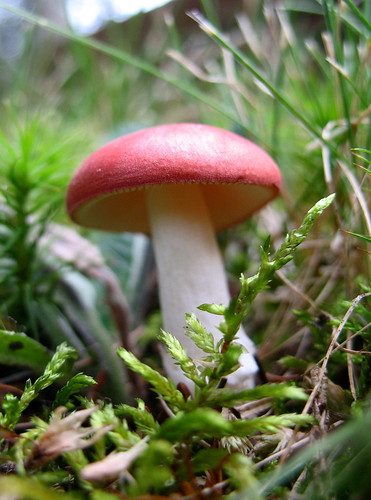
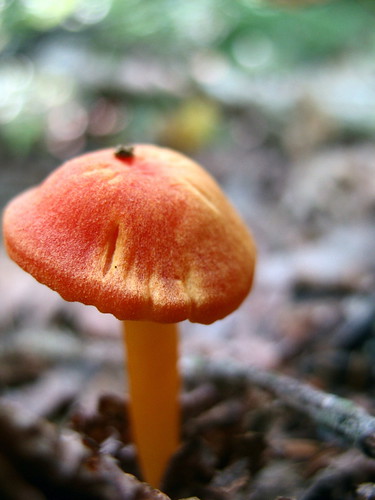
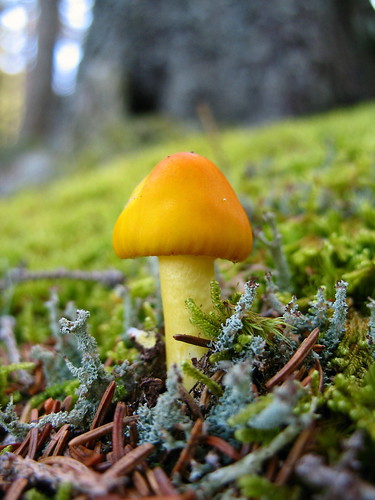
The more we hiked, the more I got into photographing mushrooms:

red and white mushroom near the cabin

orange mushroom with yellow fuzz

a little orange mushroom growing near the cabin


There's a nice view from the deck at sunset . . .

the view from the deck at sunset

but at night, it's just DARK.

the view from the deck at night

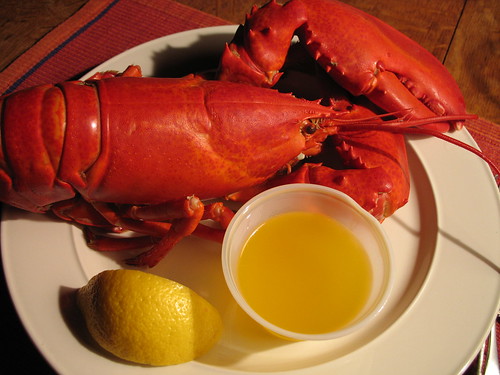
Of course I ate a couple of lobsters -

lobster!

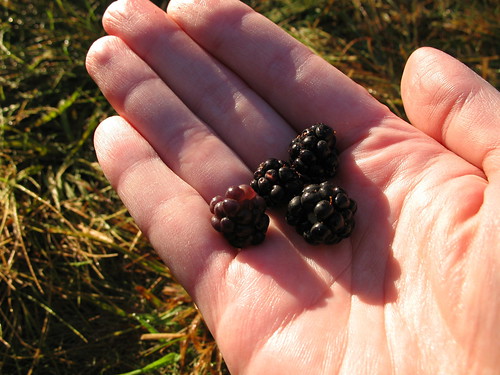
and a few other tasty things -

blackberries

and will be posting recipes this week and the next!

Wednesday, August 09, 2006

Is Wednesday too soon to name this week's bestest sandwich?

Brie, mint leaves, and sliced orange cherry tomatoes:

brie + tomatoes + mint sandwich

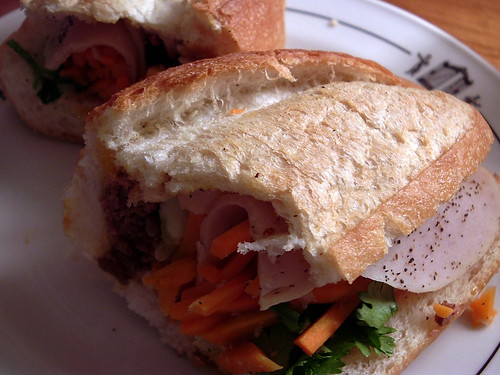
Of course it is still early in the week, and I have not yet returned to Nicky's Vietnamese Sandwiches, the bánh mì place in my neighborhood that I inexplicably did not try until recently.

bánh mì 2

This is the "Classic Vietnamese Sandwich": pâté, ham, ground pork, pickled carrot, cucumbers, cilantro, jalapeño, and mayo on a baguette.

I really think sandwiches are underrated. The limitations of the form — a couple pieces of bread + stuff that fits between them — can inspire creative combinations that maybe wouldn't make sense in another context, they're totally portable, and if you have to eat a meal somewhere slightly dodgy (ahem, a law firm cafeteria) the sandwiches are usually the least-screwed-up option. I suspect someone at Food & Wine agrees with me on this, because their recipe archive includes tons of delicious-sounding sandwiches. Here are a few I want to try:

Sunday, August 06, 2006

this Sunday's farmers' market

Or "greenmarket," if you are a fellow Manhattanite. (The Tompkins Square Park greenmarket, to be precise). I tried to not get too ambitious with my purchases this week because it appears that I'll be working a lot and won't have much time to cook. I'll have time for tomato sandwiches, though!

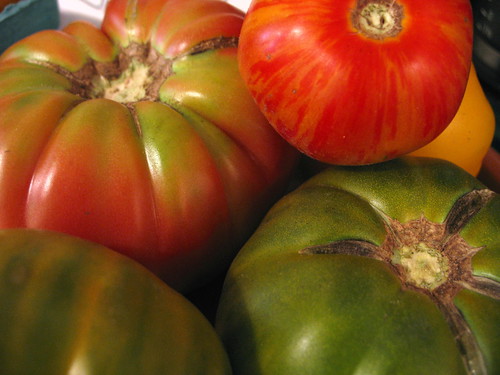
heirloom tomatoes

Organic heirloom tomatoes.

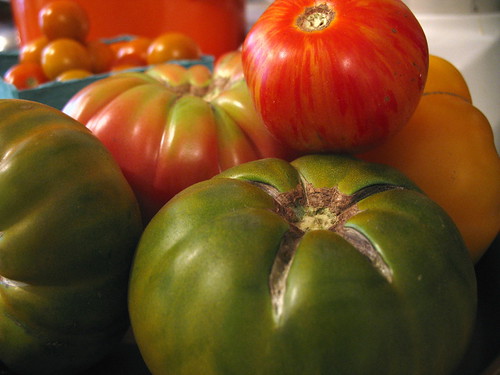
heirloom tomatoes 2

How sad these photos will make me in the middle of winter!

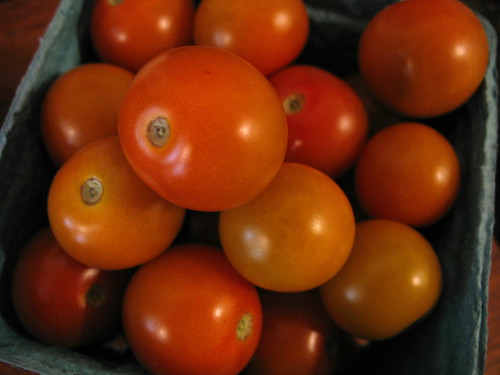
orange cherry tomatoes 2

Orange cherry tomatoes from the same farm.


I also picked up a few other things:

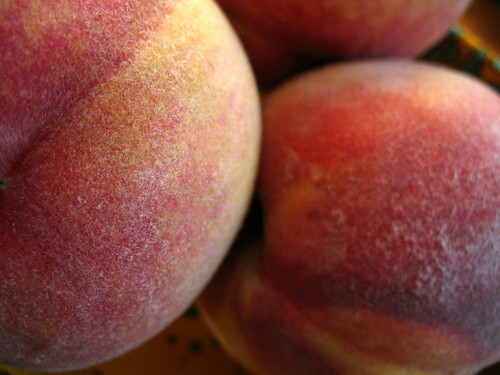
peaches close-up

peaches

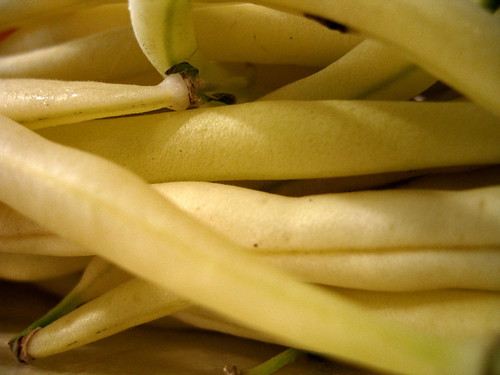
yellow wax beans

yellow wax beans, which for some reason I had been craving all week

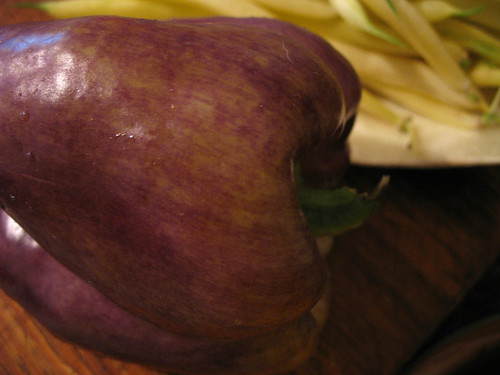
purple pepper

a purple bell pepper

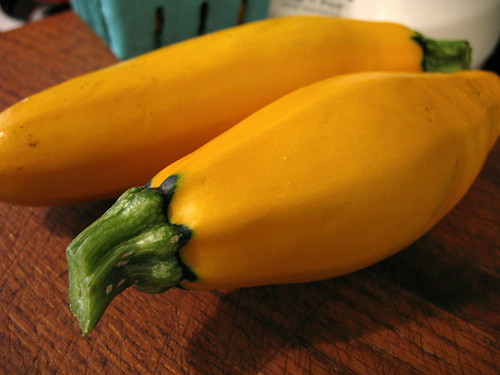
yellow summer squash

some sort of small, yellow summer squash

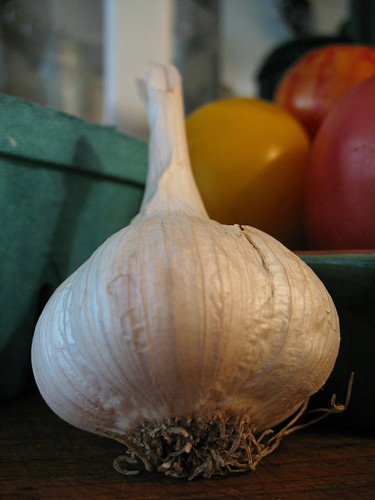
hard-neck garlic

hard-neck garlic

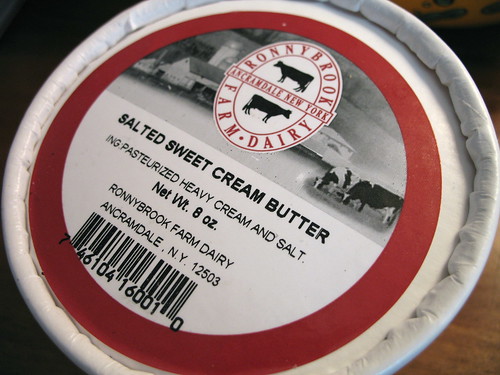
Ronnybrook Farm Dairy salted sweet cream butter

Ronnybrook Farm Dairy salted butter

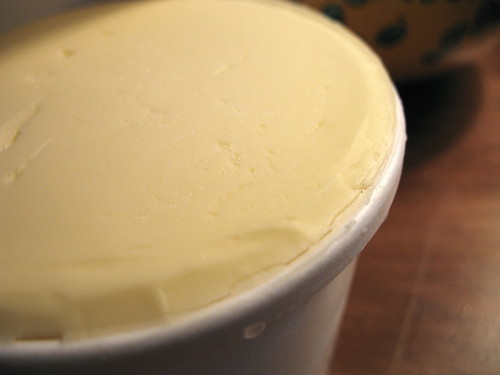
salted butter close up

I love their cultured butter too but they didn't have any this week

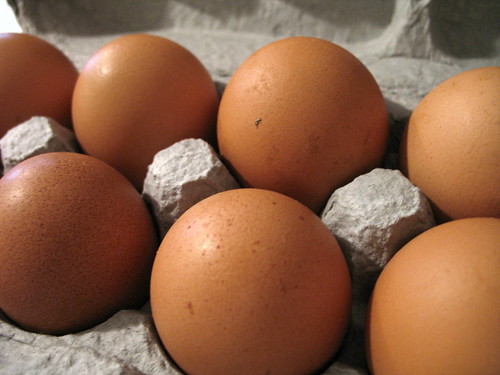
brown eggs

free-range eggs from Stannard Farm

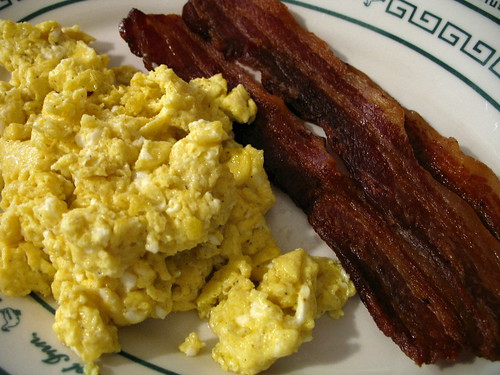
bacon & eggs

as well as some of their bacon,
which was promptly turned into breakfast

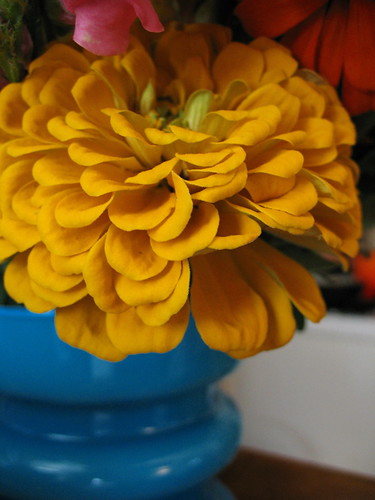
yellow zinnia 2

Stannard Farm had flowers, too!

Wednesday, August 02, 2006

a tiny, unexpected feast: part 2 — in which Tiny Banquet rassles with unfamiliar greens

With the plum tart and marinated summer squash complete, it was time to figure out what to do with the puntarelle.

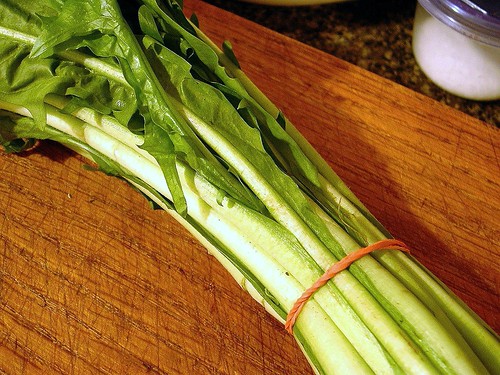
puntarelle

I had been thinking I would simply chop it up and add it to a fritatta, but I tasted a leaf after I washed it and wow, it was really bitter. Was it supposed to be cooked?

I looked in The Silver Spoon but there was no mention of puntarelle under "greens" or "chicory." (I later noticed that it is briefly mentioned in the section on dandelion greens, but there is no recipe specifically for puntarelle and I'm still not clear on its relationship to dandelion greens). I then went to the Food Network, hoping that there would be a Mario Batali recipe explaining how to use it. There are three, and each one calls for soaking the puntarelle in ice water for ten to fifteen minutes. Grazie, Mario! After its immersion the puntarelle was still bitter but now quite edible.

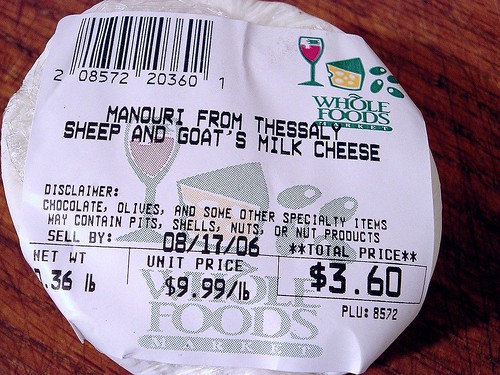
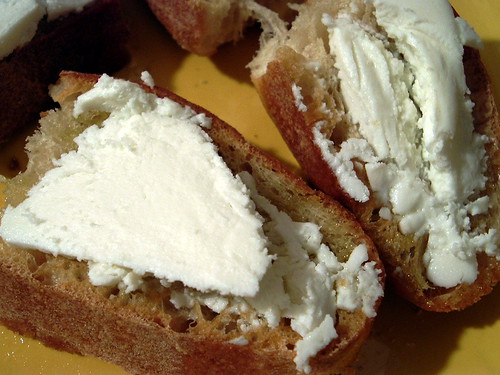
While my greens were soaking I tried some Manouri cheese, a Greek sheep and goats' milk cheese. It's a bit salty, but less so than feta, and the texture is similar to chèvre. It's delicious and fresh-tasting and would be excellent for breakfast or dessert too, drizzled with honey.

Manouri cheese

Manouri cheese + bread

Now that the puntarelle was presentable I got started on the fritatta. (Frittata?) I am hoping that having a food blog will give me a bit more perspective on what works and what doesn't when it comes to fritattas, because at this point I make them often and each one is my new favorite, my new this-one's-the-best-one. They're a great way to use up small portions of vegetables, herbs, and cheeses that otherwise might go bad before they can be eaten, and they taste as good at room temperature as they do warm.

The particular combination of ingredients listed below worked really well together: The bitterness of the greens was well balanced by creamy ricotta cheese and spicy turkey sausage from DiPaola Turkey Farms (available at the Tompkins Square greenmarket on Sundays; I'm not sure of their Union Square schedule), and mint and summer savory are both superb with eggs.

this week's BFF (best fritatta forever)

1 to 2 teaspoons olive oil, plus an additional 2 tablespoons or so for cooking the egg mixture

6 to 8 ounces turkey sausage (not in casing)

6 to 8 eggs

salt, freshly ground pepper, freshly ground nutmeg

1 to 1 1/2 cups chopped puntarelle (arugula, watercress, baby spinach or just about any green that doesn't need cooking would be a fine substitute)

chopped fresh herbs of your choice (I used about 1/2 cup of spearmint — loosely packed — and two teaspoons of summer savory)

1/2 cup ricotta cheese (crumbled fresh goat cheese would be a nice substitute)

Preheat the oven to 425° F. Heat 1 to 2 teaspoons of olive oil over medium heat in a 9- or 10-inch skillet with an oven-safe handle and cook the sausage, stirring to break up the meat, until it is lightly browned (2 to 3 minutes). Remove the cooked sausage from the pan and set aside.

While the sausage is cooking, beat the eggs in a medium-sized bowl and season with salt, pepper, and freshly ground nutmeg.

Remove the cooked sausage from the pan and set aside.

Wipe out the skillet and return it to the stove. Add the eggs and cook over medium heat until they just begin to set on the bottom (less than a minute). Using a fork or silicon spatula, pull the edges toward the center of the pan, tilting the pan to distribute the runny parts evenly. Sprinkle the greens, the herbs, the sausage and the ricotta over the eggs and stir lightly. Continue stirring as needed until the mixture is nearly firm (3 to 4 minutes).

Transfer the pan to the oven and bake until the top is set and lightly browned (about 4 to 5 minutes). Serve immediately or at room temperature.

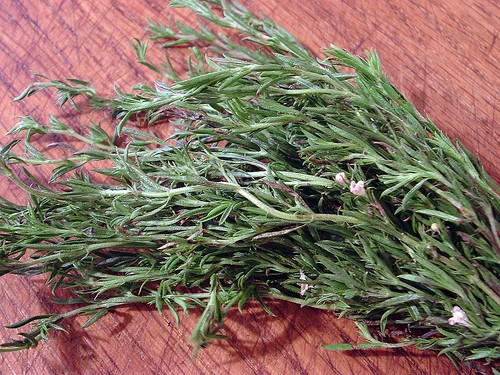
fresh savory

Fresh summer savory.

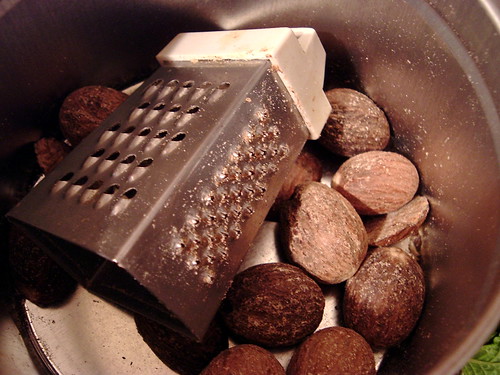
nutmeg and grater

If you store your nutmeg with a tiny grater
it is no less convenient than the pre-grated kind.

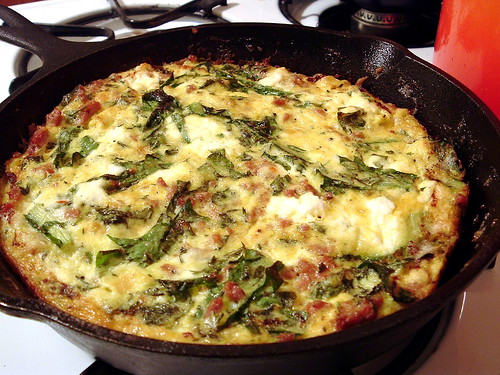
frittata with herbs, greens, sausage and ricotta

The finished fritatta.

With the marinated summer squash and startlingly good plum part for dessert, this unplanned meal turned out to be a memorable one.

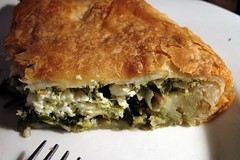
I am not going to show a picture of the finished tart in its entirety because the grated almond paste became, um, less than photogenic while it cooked. Viewed by the slice, its not so bad. The taste, however, was extraordinarily good. The plums remained very tart because I'd used so little sugar; I haven't got much of a sweet tooth at all so feel free to double the quantity of sugar to 1/4 cup should any of you decide to try it, but for me the tartness was perfect. The plums melted into the consistency of preserves, and the almond paste and lavender enhanced their flavor without stealing the show.

a slice of plum tart

Sunday, July 30, 2006

a tiny, unexpected feast: part 1

When I first started cooking — around late 1999 or early 2000, suddenly and without much prior interest in it — I would find recipes that I wanted to try first and then buy all the ingredients. This led to some interesting discoveries (walnut oil is good!), and occasionally to low-grade confusion (will I really want to put Thai dried shrimp paste in anything else ever again?).

Now that I have a bit more experience — and now that I've come to love NYC greenmarkets, which turned 30 the same week I did — I tend to buy whatever looks good, and then find a recipe. Doubtlessly seasonal eating is preferable, and at this point I know which ingredients to always keep on hand (good Parmigiano-Reggiano, for example) to make a meal out of my purchases.

The only problem with this approach is that I have trouble remembering, when I shop, that I may not have any time or any need for the stuff later. This is why I ended up making a plum tart over the weekend that the entire Tiny Banquet Committee is still eating rather than cleaning my apartment.

I really wasn't planning on cooking much and there were plenty of provisions to use up at home, so I went to the Union Square greenmarket intending to buy only herbs. I bought bundles of oregano, spearmint and savory — plus some puntarelle, a leafy green I'd never tried — and with rare discipline, I did not leave the market with enough produce to feed my whole block.

I then stopped at Whole Foods for dried pasta for a recipe I want to try later this week . . . and could not leave without a box of adorable little New York State sugar plums.
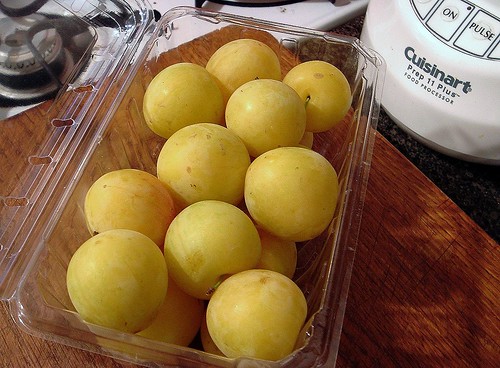
Sugar Plums

So, we were going to have dessert.

This recipe had been on my mind for a while (in spite of its corny name) because I had almond paste that needed to be used up, but I didn't have puff pastry. I ate one of the plums and it was wonderfully tart, so a sweetened pastry dough would be best. I settled on the recipe for pasta frolla, a sweet Italian pie dough, from Julia Child and Dorie Greenspan's Baking with Julia. It only takes a few minutes to make in the food processor and I was pleased with the results.
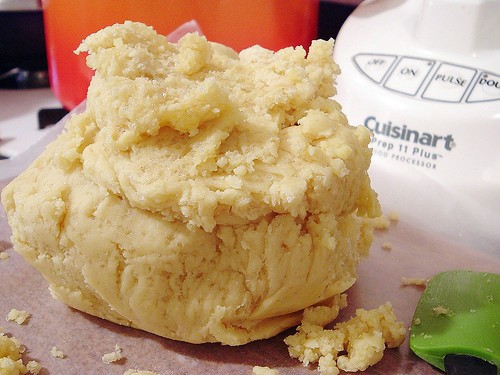
pasta frolla

The pasta frolla before kneading.

Pasta Frolla

2 cups all-purpose flour
1/3 cup sugar [I used an organic sugar with big, crunchy crystals, similar to demerara sugar]
1/2 teaspoon baking powder
1/4 teaspoon salt
1 stick (4 ounces) cold unsalted butter, or lard, cut into 8 pieces
2 large eggs, lightly beaten

Pulse the dry ingredients in a food processor until blended; then add the butter and pulse until the mixture has the texture of fine cornmeal. [If this texture eludes you, it's much better to leave the dough slightly under-worked rather than over-process it]. With the machine running, add the eggs. Process until the dough forms a ball, about 1 minute.

Remove the dough and knead until smooth. [As you can see in the photo, I like to do this on a sheet of wax paper, in a futile effort to keep my kitchen clean].

Wrap the dough in plastic wrap and chill until needed. [If less than thirty minutes, I think you can leave it out on the counter with no harm].

The recipe yields enough dough for a 9-inch pie with a lattice top; I didn't want to bother with the lattice so I lopped off one-third of the dough, wrapped it well in plastic wrap and a freezer bag, and froze it. The recipe says it will keep up to three days in the refrigerator or one month in the freezer.

It's counter-intuitive, but I find that baking often takes a lot less time and effort than other, supposedly-simple kitchen tasks. I'm pretty sure I spent less time making the tart than I did washing and chopping herbs and greens and prepping other ingredients for the fritatta I made later that day.

While the dough chilled, I sliced and pitted the plums, and snipped some lavender from Tiny Banquet Farm (i.e., the fire escape).

lavender

A typical pastoral view.

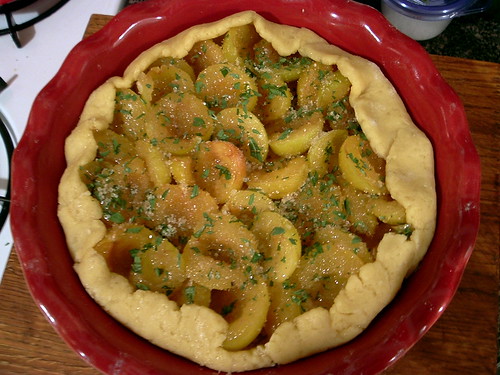
I rolled out the crust, grated 100 grams of almond paste onto it, arranged the plums on top (cut-side up), and sprinkled them with 2 tablespoons of sugar and about 1 tablespoon of chopped lavender.
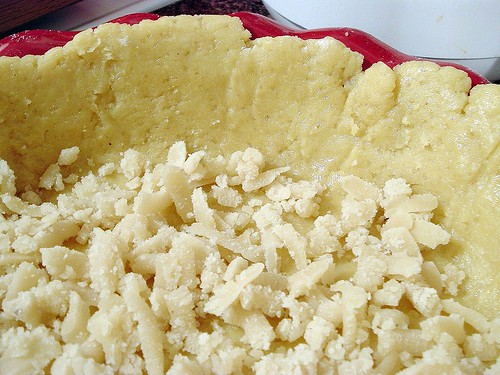
grated almond paste

Grated almond paste.


plum tart before

The tart before going into the oven.

I baked the tart for about an hour at 375° F. Whoever has my round metal tart pan at their house should feel free to leave a comment thusly indicating their intention to return it soon, please! The Emile Henry dish is prettier but after using it twice now I think it significantly increases the baking time.

While the tart was baking I wanted to make some sort of salad with the one summer squash I had. I'd been meaning to try this Mario Batali recipe for a while, and it was easy enough to scale down the recipe to 1/4 of the original:

Zucchine Marinate (Marinated Zucchini in the Style of Naples)

1 medium zucchini or summer squash
Salt
2 teaspoons extra-virgin olive oil
2 tablespoons white wine vinegar
2 tablespoons sugar
1 pinch red pepper flakes
1 garlic clove, thinly sliced [I used a small red onion instead, because I have a lot of them rolling around in my kitchen]
1 tablespoon chopped fresh basil leaves [I used slightly less fresh oregano]
1 tablespoon chopped fresh parsley leaves

Wash and dry the zucchini. Cut lengthwise into slices 1/3-inch thick. Place the zucchini slices in a colander, sprinkle with salt and set aside to drain for 2 hours. [I let my squash drain for only 20-30 minutes and the finished salad was not watery, but if making the original recipe — which calls for 1 1/2 pounds zucchini — I'd try to be patient and follow Mario's instructions].

Heat the olive oil in a sauce pan over medium heat. Place the drained zucchini slices in the pan and cook gently until golden brown on both sides, about 3 minutes per side, being careful not to burn the slices. Set aside.

In a small saucepan, bring the vinegar and sugar to a boil over high heat. Add a pinch of pepper flakes and a pinch of salt.

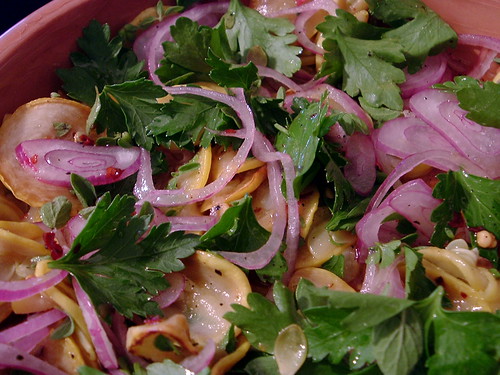
Place the zucchini slices flat in a shallow bowl, with the garlic [or onion] slices and the herbs scattered throughout. Pour the vinegar over the zucchini slices and let marinate, covered, for at least 24 hours before serving.
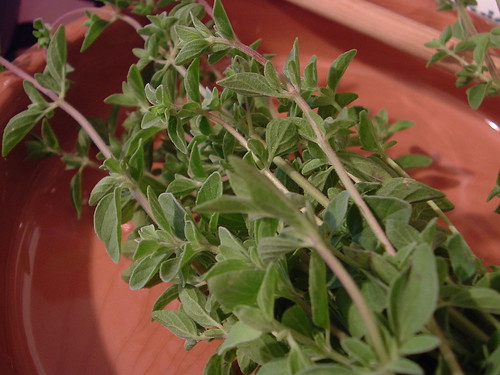
oregano

Fresh oregano.

zucchini and onion marinating

The squash in its marinade.

To be continued later today!

Thursday, July 27, 2006

Zucchini-Basil Muffins

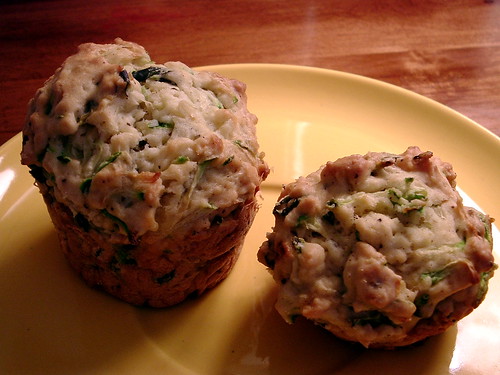
mini and regular zucchini-basil muffins


These are a Tiny Banquet favorite; I've made them probably about ten times now. I made a batch yesterday morning before work because I didn't think my lemon basil from Sunday's farmers' market could survive another day in the refrigerator.

The original recipe is on Epicurious; the muffins are supposed to be used to make little radish sandwiches, but I think they're perfect on their own. I've doubled the original recipe below — if you're making regular-sized muffins you probably want at least a dozen. If you won't eat them all they're very portable and easy to share. I've also edited the instructions for clarity, and replaced the shortening (yuck!) with butter.

You can use other herbs in place of the basil; I've made these with a mix of thyme, sage, and rosemary and also with basil, marjoram, and thyme and both batches were excellent. I'm sure mint and thyme would be good too. Depending on what herbs your're using, reduce the amount to about 1/4 cup, or maybe a bit more if you're using mint.

  • 2½ cups all-purpose flour

  • 1½ teaspoons salt

  • 1 teaspoon baking soda

  • 2 teaspoons double-acting baking powder

  • 1 teaspoon freshly ground pepper

  • 4 tablespoons unsalted butter, softened, plus more if you need to butter your pan (I use a non-stick silicone pan)

  • 2 tablespoons sugar

  • 2 large eggs

  • ½ cup buttermilk (see note below)

  • 2 cups coarsely grated well-scrubbed zucchini (one medium-size zucchini will give you the right amount)

  • 1 cup finely chopped fresh basil leaves


Preheat the oven to 400°F.

Whisk together the flour, the salt, the baking soda, the baking powder and the pepper. In another bowl cream together the butter and the sugar, then beat in the eggs and the buttermilk; continue beating until the mixture is combined well. Stir in the zucchini and the basil. Add the flour mixture to the zucchini mixture, stir the batter until it is just combined, and divide it among 12 well-buttered muffin tins. Bake the muffins in the middle of the oven for 15 to 18 minutes, or until a tester comes out clean. Turn the muffins out onto a rack, and let them cool.

Yield: 12 muffins.

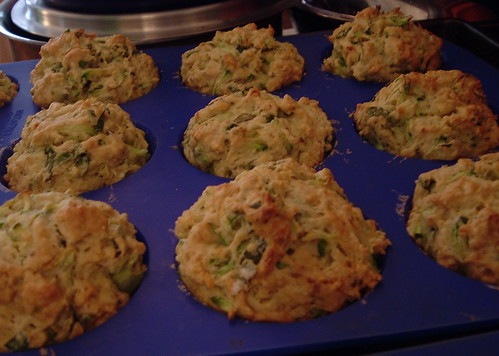
zucchini basil muffins


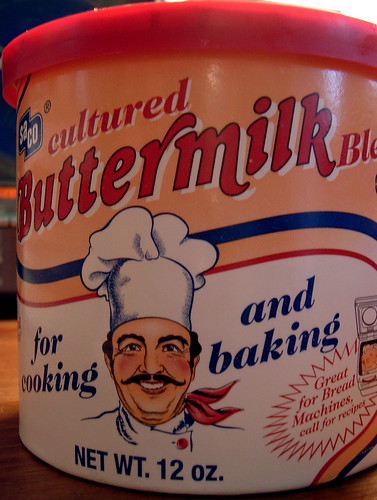
Note: I almost always make these with powdered cultured buttermilk, and I think it's a fine substitute. It's good for cornbread and pancakes too.

powdered buttermilk

Monday, July 24, 2006

Tiny Banquet goes to Connecticut, makes giant pot of pink pudding

On Saturday morning Tiny Banquet packed up the car and headed to Westbrook, Connecticut to visit the Chairwoman's parents.


dumpy truck


They don't mind if I bring some dirty laundry and stuff.


It was too cloudy to go the beach so I decided to make a recipe I'd been wanting to try, an Italian watermelon pudding called Gelo di Melone from Anissa Helou's Mediterranean Street Food.

Step 1 was to find a ripe watermelon. There were none at the Saybrook farmers' market, but there was a perfect one at Walt's Market around the corner. Reportedly Saybrook resident Katharine Hepburn shopped at Walt's. It's the sort of market anyone would be lucky to have nearby, with fresh produce out front, a good-smelling meat counter running the length of the back of the store, and a small stash of Ciao Bella sorbet in the freezer case.


Walt's Market


Walt's sign 2

We didn't pick up anything besides the melon because we had reservations at Café Routier for dinner.

Step 2 was to remove the seeds from the melon. A time-consuming task, but not an unpleasant one.


watermelon


watermelon close-up


After that the pudding comes together very quickly: Put about a quart of strained watermelon juice (a 5- to 6-pound melon will give you the right amount) in a pan and whisk in 1/3 cup of sugar and 2/3 cup cornstarch. When there are no lumps remaining, turn the heat to medium-high and bring the mixture to a boil. Let it boil, whisking continuously, "for a couple of minutes." (I let it boil for about 4 minutes).


Gelo di Melone cooking


Take the pan off the heat and add some jasmine water (the recipe calls for three tablespoons, to be prepared by soaking jasmine flowers in water for a few hours) or rose water (which is what I had; I used two teaspoons). Don't worry if the pudding looks thin, it will thicken as it cools. You don't want to let it cool in the pan entirely, though, because you need to be able to pour it into eight serving bowls or cups.

I didn't pour the pudding directly into serving bowls because I planned to leave half of it in Connecticut and take the other half home in my little cooler; I poured it into a couple of tupperware-type containers, and headed off to liberate a private beach from Whitey.


Grove Beach gate


We didn't bother fiddling with the gate but I'd say there's about a 95% chance the security code is
1-2-3-4 — mighty clever if you're one of the gin-and-tonic-addled locals
.


Grove beach


Looking east on Grove Beach.


It wasn't until Tiny Banquet got back to Manhattan and spooned some of the pudding into a dish that I realized what a mistake I'd made: If the pudding isn't poured into its serving dish before it sets, it will never be pretty. I tried to get rid of the lumps with the tiny whisk I usually use for salad dressing, but it only made the pudding lumpy + fluffy.


yuck, it's lumpy


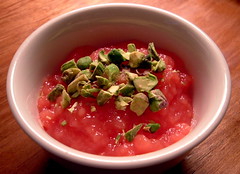
Hellou says that chocolate chips and candied zucchini (zuccata) are the usual garnishes; the recipe lists these as optional, and calls for coarsely ground pistachios and ground cinnamon.
I used only chopped pistachios
.


On Monday night I decided that if the rest of the pudding was to be eaten, it would have to first be made liquid again and poured into serving dishes. I put the remaining pudding into a small saucepan and heated it over a low flame, stirring with a fork every minute or so. Gradually it melted to a semi-liquid state; I took it off the heat before it was completely liquified because I didn't want it to be overcooked. This time I poured it into serving dishes while still hot. Voila! After cooling to room temperature and then spending some time in the refrigerator, the pudding was much more presentable.

Gelo di Melone, unfugged


The pistachios really complement the delicate flavor of the pudding; I'm not sure how else to describe it other than to say that it tastes summery and pink. Both the watermelon and rose water flavors come through clearly, and the taste and texture are refreshing. It was fun to make and I don't dislike it, but I can't imagine I'll ever have a craving for it in the future.