Sunday, August 30, 2009

terrarium afternoons

Sorry for the lack of updates lately, but we've not been doing much cooking at all. On weeknights I've been working kind of late and on weekends we've been out of town.

Here are some photos from a recent hike — the most humid hike ever — in a Connecticut forest like a terrarium, just us and the moss and the mushrooms and the millipedes. Very little light worked its way into these woods. No breezes either, except for when we were at the very top of whichever ridge we wound our way around.

humid August hike {Holga}

Chatfield Hollow State Park, Killingworth, CT.


keep off

also Chatfield Hollow


Chatfield Hollow

this too


IMG_0349

Devil's Hopyard State Park, East Haddam, CT.


fungi-striped tree {1974}

fungi-striped tree, Chatfield Hollow


someone's wall, once

crumbly wall at Chatfield Hollow


trees at Chatfield Hollow, white trail

trees about mid-way on the white trail (Lookout trail) at Chatfield Hollow


Devil's Hopyard {1974}

falls at Devil's Hopyard


If you visit Chatfield Hollow, make sure you stop in the nature center and see the three-legged turtle. There's also a book of photos of the park's construction by the Civilian Conservation Corps in the 1930s.

Here's some music suitable for this time of year. With the exception of the Jarvis Cocker track on the A-side it's mostly old favorites rather than shiny new stuff.

music for a humid late summer picnic


A-side

The Monochrome Set, White Noise
(from Black And White Minstrels)

Jane Birkin, Mon Amour Baiser
(from Di Doo Dah)

Disco Zombies, Mary Millington
(from Perfect Unpop: Peel Show Hits And Long Lost Lo-Fi Favourites - Vol 1. 1976-80)

Jarvis Cocker, Leftovers
(from Further Complications)

Jeremy Jay, Lunar Camel
(from Airwalker)

Morrissey, My Love Life
(from Morrissey At KROQ [EP])

The Velvet Underground, New Age
(from Loaded)

Levitts, Candy
(from We Are The Levitts)

Nancy Sinatra and Lee Hazlewood, Summer Wine
(from Nancy & Lee)

The Jesus And Mary Chain, In The Rain
(from The Complete John Peel Sessions)

Scott Walker, Time Operator
(from 'Til The Band Comes In)


B-side

Pulp, The Birds In Your Garden
(from We Love Life)

Connie Converse, Talkin' Like You (Two Tall Mountains)
(from How Sad, How Lovely)

Vashti Bunyan, I'd Like To Walk Around In Your Mind
(from Just Another Diamond Day)

Maher Shalal Hash Baz, On The Shore Of Loch Kawaguchi
(from From A Summer To Another Summer (An Egypt To Another Egypt))

Robert Wyatt, Just As You Are
(from Comicopera)

Beirut, Forks and Knives (La Fete)
(from The Flying Club Cup)

So Everyone, Bonnie 'Prince' Billy
(from Lie Down In The Light)

Crystal Stilts, The City In The Sea
(from Alight of Night)

The Durutti Column, Sketch for Summer
(from The Return Of The Durutti Column)

PJ Harvey, seagulls
(from Uh Huh Her)


All photos in this post were taken with an iPhone and processed with the app CameraBag.

Thursday, July 02, 2009

the best $1.50 we spent at the farmers' market lately

There are plenty of great finds for approximately the same price but we recently came home with a voluminous bunch of lovage that deserved some sort of prize. It's a pungent herb with a celery-like scent and flavor and it's a brilliant addition to all sorts of familiar foods. I used every scrap of leaf on it and was sad to see it go.

mountain lovage (Ligusticum mutellina, I think)

I forgot to take a photo of the bundle itself in its glory.
It looks a lot like this 18th-century illustration of mountain lovage (Ligusticum mutellina)
from the NYPL digital image library.

Its appearance is celery-like too: flat leaves, with a shape familiar to those who seek out bundles of celery with as much foliage as possible still attached, for adding to salads and soups and anywhere parsley would go. (If you've never taken apart a tidy pile of celery bundles at the grocery store to get at the one with the most lush and perfect leaves, try it some day; they are worth searching for, and it's easy enough to neaten up after yourself after you get your secret goodies that no one else cares about). Lovage stalks, too, look very much like celery, although they're more slender, and too fibrous to chew happily. That shouldn't stop you from adding them to something you're braising or simmering, though, and fishing them out at the end of cooking along with all the other woody bits like bay leaves and thyme stems. Or you could throw them in your bath "to increase attractiveness and attract love."

I've mentioned lovage in the past — remember the focaccia with strong herbs, for people with strong personalities? or the stuffed squash? — but only in passing, and my recent experiences with it convinced me I need to grow it on my fire escape to be assured of having a steady supply of it.

white bean and snap pea salad

My first use of it was to add a tablespoon or so (finely chopped) to a super-simple salad that would have been completely unremarkable without it: a can of white beans, a handful of sliced cherry tomatoes, a handful of the first local snap peas of the season (trimmed and halved), and a dressing of nothing more than olive oil, lemon juice, salt and pepper. I threw this together one morning and took some of it to work, and voilà, my lunch outside at grey old 1 Chase Manhattan Plaza was a picnic. The lovage added a brightness that demanded to be noticed, but it wasn't overpowering. It gave the salad an intense celery flavor but in the nicest possible way, like celery might taste if you pulled it straight out of a garden still warm from the sun. If you try this make sure you rinse the beans well under plenty of cold water; they can taste like can otherwise.

The most memorable lovage-bedecked meal was a dinner of seared seitan with a wilted lovage sauce.

quinoa with braised radishes, radish greens, and flowering chives; seitan with lovage sauce; steamed snap peas with lemon balm

We ate this with some quinoa studded with braised radishes, steamed radish greens and flowering chives, and the rest of the snap peas, barely-steamed and tossed with a little butter and chopped lemon balm. An unlikely assortment of ingredients, but a very pleasant dinner. There's a lot of lovage in the sauce considering how intense it is compared to other herbs, but the seitan is flavorful and chewy enough to support it. Think of it as sort of an eccentric vegetarian take on steak with maître d'hotel butter. The quinoa will get its own post soon but how to give a recipe the lovage sauce when I didn't measure anything? I'll do my best at reconstructing it but use your judgment (i.e., if the sauce looks dry, add a splash more wine, and if you added too much wine, let it reduce a little longer).

seared seitan with wilted lovage sauce
serves 2 to 3 people

8 ounces seitan (this one is perfect), sliced 1/2" thick and patted dry
2 teaspoons olive oil
2 tablespoons butter, plus a bit more near the end of cooking
1/3 cup white wine or dry vermouth (Noilly Prat is good)
1/2 cup loosely-packed lovage leaves, finely chopped
sea salt and freshly ground pepper

Sear the seitan in the olive oil over medium-high heat in a non-stick pan. When it is evenly browned on both sides, remove it from the pan and set it aside. (Don't cover it tightly, though, or you'll lose the nice crispness around the edges). Wipe out the pan with a paper towel and melt the butter over low heat. Add the wine or vermouth, turn up the heat to medium-high, and let it simmer until it is reduced by half (or by a third, if you are hungry and impatient). Stir in the lovage and cook for another two minutes or so. (It should be thoroughly wilted and softened). Take the pan off the heat, season the sauce with a pinch of salt and some pepper, and add a bit more butter (an additional 1/2 a tablespoon will help the flavors come together; a full tablespoon is better). Stir gently just until the butter is melted. Spoon the sauce over the seitan and serve right away.

Later in the week the lovage did something interesting for prosaic stuffed mushrooms, which I might never have even bothered to make without it.

stuffed mushrooms with breadcrumbs, lovage, feta cheese

I had large white mushrooms and an annoyingly close-to-finished bag of panko bread crumbs taking up space in the cabinet, so I sautéed a finely minced shallot with some of the mushroom stems (maybe 1/2 of the stems) in 2 tablespoons or so of olive oil until both were softened, turned the heat off, let them cool, then stirred in a tablespoon of finely chopped lovage, two tablespoons or so of cubed sheeps' milk feta cheese, and enough panko bread crumbs to stuff all my mushroom caps. I baked the stuffed mushroom caps for maybe 15 or 20 minutes in a 375°F oven and they were just the right crisp thing to have with a dinner salad in place of bread. Stuffed mushrooms are an old-fashioned cocktail party-type of food and whenever people do make them now they tend to get self-conscious and make them too rich. Preparing them simply this way and not weighing down the stuffing with cream or too much gooey cheese reminded me that they can be fun to eat. If they look dry on top before you put them in the oven, drizzle some olive oil or white wine or dry vermouth over them, or even a tiny splash of water flicked from your fingers. The stuffing should be light and crisp, but not so crisp that diabolical shards of breadcrumbs shred the roof of your mouth.

There's more: we were not out of lovage just yet. I had a craving for cornbread so that's where it went. If you hold fervent beliefs about traditional cornbread ingredients, rest assured that I didn't screw with much else about it. It's still very basic, very spot-on (for me, at least) in terms of flavor and texture; it's just that the lovage added a deep green garden note to it.

lovage cornbread

I have been using this Food & Wine recipe for corn bread for years. Although there's no text accompanying the recipe, I believe they may have taken it from the Dean & Deluca Cookbook, since that's what I have it attributed to in my recipe collection. (The recipe section of their website used to be a lot fuller in the early days of the internet, although there's still a lot there).

lovage cornbread

Makes one 9" round cornbread.

Adapted from this recipe, which makes double the quantity. I have always reduced the amount of sugar when I make it because I can't abide sweet cornbread, but of course you may prefer it that way.

A cast iron skillet (see below) is recommended but not absolutely essential. You can follow the same process with any baking pan that's the same size.

1 1/2 tablespoons peanut or vegetable oil
3/4 cup all purpose flour (I used white whole wheat this time and it didn't really behave differently than AP)
1 1/4 cups stone-ground cornmeal
2 scant tablespoons sugar
1 tablespoon baking powder
1 teaspoon fine sea salt
1/4 cup finely chopped lovage leaves
1 cup buttermilk (I used low-fat cultured buttermilk this time but I have used the powdered stuff many times and that's fine too, as is regular milk)
2 large eggs, lightly beaten
3 tablespoons butter, melted

Heat the oven to 425° F.

Stir together the flour, cornmeal, sugar, baking powder, salt and lovage. Add the buttermilk, lightly beaten eggs, and melted butter and stir just until the ingredients are thoroughly combined. (If you are using white whole wheat flour in place of all purpose, as I did, the batter will look a little shaggy; that's perfectly fine).

Swirl the oil around to coat the interior of a 9" cast iron skillet and heat it over medium-high heat until it is hot but not smoking. (Alternatively, if you're using a baking pan, heat it in the oven). Pour the batter into the skillet or pan (it may bubble and hiss, so be careful) and bake for approximately 20 minutes, or until the top is springy when pressed and lightly browned. The bread is at its best while still warm but leftovers reheat well.

Even with one pan of cornbread rather than the two the original recipe produces, we still had quite a bit for two people to eat. Thus the last 1/4 of the bread (and some of the buttermilk I'd bought to make it) ended up in an improbable but very tasty preparation of stuffed zucchini.

stuffed zucchini

I added some fresh sage since I had some on hand, but thyme would be great too.

improbable stuffed zucchini

2 medium zucchini
4 large mushrooms (120 g/4.25 ounces), sliced
1/2 of a small sweet onion, finely chopped (approximately 1/3 cup)
2 tablespoons butter
1 tablespoon finely sliced fresh sage (or finely chopped thyme)
fine sea salt and freshly ground pepper
1/4 of a 9" round cornbread (a little stale is fine), cut into 1/2" cubes
3/4 cup cultured low-fat buttermilk (or whatever type of buttermilk you have; vegetable stock would probably work too)
a tiny bit of oil for whatever you're going to bake the zucchini in

Halve the zucchini the long way and scrape out the seeds. A grapefruit spoon is perfect for this. I sprinkled the interiors with salt and left them upside-down to drain some of the water out, but I'm not certain it's necessary.

making stuffed zucchini

Sautée the mushrooms and onions in 2 tbsp butter until soft. The mushrooms will have given off some liquid and although you would normally cook it off, it's fine to leave a bit in the pan here, since you don't want the stuffing to be too dry.

sautéing mushrooms and sweet onion

Heat the oven to 375° F.

Stir the sage or thyme into the mushroom and onion mixture and season it generously with salt and pepper. Gently stir in the cubed cornbread and the buttermilk. Stir just until the bread is thoroughly integrated with the other stuffing ingredients, taking care not to mash it into a mush.

Use the bread mixture to stuff the zucchini and bake them in a lightly oiled pan for approximately 25 minutes, or until well browned.

Tuesday, June 16, 2009

a dinner just toothsome enough for a guest whose chompers are undergoing repairs

Mr. Banquet has had two root canals in recent weeks, which means we've been chowing down a little more daintily than usual.

teeth + claws vs. teeth

Chompers + claws vs. chompers
at the Clambake restaurant, Scarborough, Maine.

Dinner requires a little more thought about texture than usual. Really crusty bread is out, obviously, and the things that work so well with crusty bread are far less appealing when one imagines squishy pre-sliced grocery store bread alongside them. Eggs in all forms are ideal for times like these, but we already eat plenty of them. Polenta might be nice, but it's not what one really wants to eat on a late spring/early summer evening. Nor great big pots of soup or beans. Cold sesame noodles, however, are just right. Most of the recipes are pretty basic and benefit from an addition of barely-steamed vegetables: yellow wax beans (like so), spinach, carrots, and mushrooms work very well, as do raw bell peppers, chopped cucumbers, finely shredded cabbage, and crisp greens like mizuna. This recipe has been a recent favorite, but I'm not so in love with it that I won't try others. (Note, however, that it's improved by using rice vinegar rather than red wine vinegar, and that if your soy sauce or tamari is very low in sodium you may need to add a little salt).

cold sesame noodles with baked tofu 5

Cold sesame noodles with very simple baked tofu.

cold sesame noodles with baked tofu

There's no recipe for the tofu; it's just marinated in tamari, toasted sesame oil, red chile pepper oil and loads of finely chopped ginger, and baked at 375°F until well-browned and crisp at the edges.

I've had Hsiang Ju Lin and Tsuifeng Lin's The Art of Chinese Cuisine on my shelf for ages and had never cooked from it so I decided to try their recipe instead. It's very basic but I nonetheless made a few changes to it, so we'll call this an adaptation. First, the recipe called for MSG, which has fallen out of fashion since the book was published in 1969 for several good reasons. Second, the recipe called for only a very scant measure of peanut butter and didn't specify how much sauce it yields; I had tahini instead, and nearly a pound of brown rice noodles I needed sauce for, so I upped the measurements a bit. And finally, the recipe called for 1 pound of bean sprouts; I do like them but I had other vegetables I wanted to use instead (mushrooms, carrots, and scallions).

cold noodles with sesame sauce
adapted from Hsiang Ju Lin and Tsuifeng Lin's The Art of Chinese Cuisine

serves 4

for the sauce:

1 tablespoon finely chopped fresh ginger
1 teaspoon plus 1 tablespoon peanut oil
3/4 teaspoon mirin (you can use sugar instead)
1 tablespoon sesame oil
1/4 cup tahini (you can use peanut butter instead, although the flavor will of course be different)
2 tablespoons tamari (or low-sodium soy sauce)
1 tablespoon rice vinegar
approximately 3 tablespoons water
fresh finely ground white pepper (or dried red chile flakes or shreds if you want spicy noodles)

An hour or so before you are ready to begin cooking, marinate the finely chopped ginger in 1 teaspoon peanut oil and 3/4 teaspoon mirin or sugar. (I'm not sure what the reasons for this step are but the original recipe insists on it; I'm guessing it enhances the flavor of the ginger).

Whisk together with a fork 1 tablespoon peanut oil, 1 tablespoon sesame oil, the tahini, the tamari, and the rice vinegar. Whisk in approximately 3 tablespoons water, or a little more if your tahini is very thick, until the sauce is a nice consistency for coating the noodles. Stir in the ginger and its marinade and season the sauce to taste with the white pepper.

for the noodles:

1 14 oz. package of brown rice pasta (fettuccine, linguine or spaghetti shape)
vegetables of your choice (I used a large handful of sliced shiitake mushrooms and 1 large carrot, sliced)
2 to 3 scallions (green onions), finely sliced
bean sprouts (optional), blanched for 30 seconds and drained well
2 tablespoons toasted and lightly crushed sesame seeds (optional)

Prepare the noodles according to the package directions and steam or blanch your vegetables while they're cooking. Toss the cooked noodles with the sauce until they are thoroughly coated. Gently mix in the vegetables, scallions, sprouts and sesame seeds (if using). You might want to reserve a little of the sesame seeds to sprinkle on individual servings; we left them out this time because we didn't want Mr. Banquet's dentist to find them stuck in his grill.

************

After so many utilitarian dinners, dessert seemed to be in order. I had gorgeous local strawberries and couldn't remember the last time I'd had strawberry shortcake so that was an easy decision, but I also had loads of fresh herbs from the greenmarket and was eager to use at least one of them in dessert: lovage, chervil, lemon balm and Delfino cilantro. I've been eyeing this recipe for a long time so the idea of combining strawberries and cilantro didn't seem all that strange to me, but I had something else in mind for the latter. The lovage, too, was destined for a number of other things. (More on this soon). The lemon balm would seem to be the most dessert-friendly of the bunch but as soon as I sampled the chervil — delicate, sparklingly fresh, tasting of anise but somehow brighter — that was the one I wanted to use. Why had I only ever used it in savory dishes before?

Being a lifelong Northeasterner (and having a selectively sieve-like memory), I need a recipe to make biscuits, so I pulled Villas at Table off the shelf and skimmed the chapter on strawberry shortcake. Villas had quite a bit to say about it:
Now for the very sensitive and touchy question as to whether genuine strawberry shortcake should be made with biscuit or scone dough or sponge cake. Most Southerners and Midwesterners simply could not conceive of eating real shortcake not made with some form of short pastry; Yankees, who've never really understood what biscuits are all about, generally maintain that shortcake is synonymous with sponge cake; and I'm resolutely convinced that today's inhabitants of the West Coast (where, ironically, the world's greatest strawberries are produced), couldn't care one way or the other. Since I must say that, over the years, I've savored some very decent strawberry shortcake prepared with sponge pastry (most notably at Lindy's in New York), I'd almost be willing to attribute high status to this version were it not for one important culinary fact: the word 'shortcake' indicates automatically that shortening (or some form of fat) is a major ingredient in the pastry, and since sponge cake contains no trace of fat, it cannot qualify as an authentic foundation for the dessert.

Sponge cake was out of the question for me; its inexplicable prevalence is the reason why I almost never order this dessert in restaurants. I would rather not have any dessert at all than have a sad little disc of what appears to be yellowing insulation set down before me. Somehow, though, I ended up using a more recent Villas biscuit recipe (from his promisingly-titled Biscuit Bliss) rather than the one in Villas at Table.

And it's a brilliant recipe, although I always seem to have good luck with biscuits. (Is there something about the shape of my fingers that permits me to turn out perfectly respectable biscuits while my dumplings look like a poorly-supervised kindergarten project?) The only thing I changed about it was to add chervil, but somehow I ended up with 8 fluffy biscuits — plus one little lumpy one for me to taste-test — rather than the 6 the recipe says it yields. I measured my biscuit cutter to be sure I'd used the size Villas specifies and sure enough I did, and if anything I rolled the dough out even thicker than the recipe says to. I've not specified quantities for the strawberries or cream because I didn't measure them, as I was only making dessert for two. (If it's any help, I'm guessing I used approximately half a cup of cream, beaten with a tablespoon or so of powdered sugar, to make more whipped cream than we intended on eating but somehow polished off).

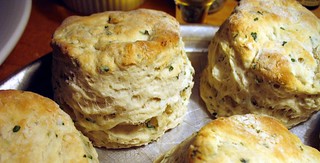
chervil biscuits for strawberry shortcake


strawberry shortcake with chervil

I really want to make this again before strawberry season ends because the chervil flavor didn't come through as intensely as I'd hoped it would and I want to try something else with it: There's a recipe for herb-infused milk or cream in The Herbfarm Cookbook that's a very simple but very effective process of extracting loads of flavor from herbs through heating and steeping. This is the same idea I recently made use of in preparing the chamomile-honey crème anglaise I wrote about; it's not any more complicated than making a cup of tea, and I think it's necessary to infuse the cream for the biscuits if the chervil is to play a major role in this dessert. Another thing I'd like to try is maybe adding a splash of Pastis to the whipped cream, which would complement the chervil's anise notes.

strawberry-chervil shortcake
shortcake recipe from James Villas

serves 8

for the shortcake:

2 cups all-purpose flour
1 tablespoon baking powder
2 tablespoons sugar
1/2 teaspoon salt
1/4 cup fresh chervil, finely chopped
1 1/4 cups heavy cream
milk for brushing (optional)

for the rest of the dessert:

strawberries
heavy cream
powdered sugar
more fresh chervil, finely chopped

Heat the oven to 425°F (220°C).

Whisk together the flour, baking powder, sugar, salt and chervil. Add the cream and stir just until the ingredients start to form a dough. Turn the dough out of the bowl onto a lightly-floured surface and gently knead it just long enough to thoroughly combine the ingredients. (Villas says "knead about 8 times").

Pat the dough out approximately 1/2-inch thick and cut out biscuits using a 3" cutter. If you need to, pat the scraps together and cut out more biscuits until you have eight of them, but try to handle the dough as gently as possible. (I'd also recommend that you rinse your hands with very cold water and dry them quickly before you do this, but maybe I'm just paranoid about being very deliberate with biscuit dough).

Arrange the biscuits on a baking sheet or two, brush them with a little milk or cream (optional), and bake them approximately 15 minutes, or until they are lightly browned. (I use two quarter-sheet pans and rotate them while cooking, and that seems to be a good way to cook them evenly).

Let the biscuits cool completely. In the meantime, wash and slice the strawberries, and whip the cream and powdered sugar together in a large bowl. (As I mentioned above, I only made enough whipped cream for the two of us, and I used approximately 1/2 cup cream and 1 tablespoon powdered sugar).

Split the biscuits and pile the sliced strawberries, whipped cream, and additional chopped chervil on top.

Tuesday, May 19, 2009

greens mixed with greens, plus some greens

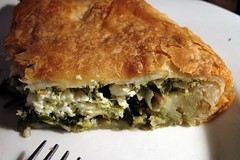
inside a pastry. Specifically, kale, dandelion greens, mint, dill and green garlic shoots, with just enough enough goats' milk feta and beaten egg to prevent relentless verdancy.

vegetarian pasty with spring greens

I have done a little research and I am still at a loss as to what to call these so let's just say they're pastries. In spirit they are close to a Cornish pasty — or pasties, plural — but the seam of those often runs along the top, not the side. The shape of my pastry more closely resembles that of an elongated Scottish Forfar bridie (here or here) but without its characteristic peepholes, or an obese empanda (particularly the Argentinian and Chilean incarnations, aquí o aquí).

The taxonomy gets even more complicated when we consider the contents. Pasties can hold just about anything but are traditionally made with meat. The Oxford Companion to Food (2nd ed). explains that "[c]ubed beef with root vegetables is now considered standard, but other meats or fish, or vegetables alone, were used," and quotes pasty authority Theodora FitzGibbon for a proverb about pasty innards: "'It is said in Cornwall that the Devil never crossed the River Tamar into that county for fear of the Cornish woman's habit of putting anything and everything into a pasty.'"

Despite what the Companion says, I have a feeling that if my all-vegetable pastries went masquerading as pasties in a shop window like this one, they might be called perfumed ponces and run away screaming:


a scene from Withnail & I

The Companion, by the way, says pasties have "a seam of crimped pastry running the full length of the upper side," while the Cornish Pasty Association says they are "crimped on one side, never on top," because historically they were taken to work by miners, who could grasp their lunch by its sturdy seam-edge without washing their grubby hands, and simply toss its handle away when finished eating. (The pasties would presumably be too bottom heavy if the seam was on the top, causing the miners to dribble pasty innards all over their jumpsuits.)

The pasty has never caught on in the States, which might be a little strange considering how portable it is and how much Americans like to eat in their cars and at their desks. It's tidier than a burger — is that the problem, that it's too introverted for us? Too utilitarian? We have enough expats and curious Anglophiles to sustain the sale of proper pasties in New York City but they're very much a specialty item. Former NY Times restaurant critic William Grimes sneered at pasties in the late 1990s after tasting one in its native habitat and Cornwall sneered right back, but more recent pasty debate has centered around whether pasties are indeed Cornish or Devonian. A debate I would not wade into even with titanium wellies, so let's just move along to my recipe for pastries with an r.

vegetarian pasty with spring greens

You can prepare the vegetables or the dough for the crust a day or two ahead of time without any harm to the finished pastries, and there's quite a bit of flexibility regarding the greens. This recipe came about because I bought mild, young kale at the farmers' market and absentmindedly picked up some dandelion greens at the health food store the next day, but you could use one or the other, or spinach in place of either.

IMG_9204

I didn't weigh my dandelion greens. If you can manage to pick some yourself, pick about this many.

Likewise, I used green garlic because I had some that needed using up; you could easily leave it out, or substitute one or two cloves of ordinary mature garlic. I forgot to snap a photo of the green garlic shoots but there's an old one in my Flickr here; it's stinky stuff but the taste is fairly mild, and you can use between one and three shoots of it in this recipe. I washed and steamed all my greens the day before and ended up with slightly more than necessary to fill the pastries, but they're perfect for stirring into scrambled eggs or filling omelettes.

steamed spring greens

If you don't feel like making the pastry dough you could use filo instead, as I did for the pumpkin dinner I made for Halloween, or you could use frozen puff pastry. The very popular brand that sounds like Leper Midge Arms is made with partially hydrogenated vegetable shortening and high fructose corn syrup, so if avoiding that sort of thing is important to you look for this brand instead. Fresh Direct used to sell something comparable for a lot less money but they don't carry it any longer, so you'll have to empty your piggybank or pose for some very arty photos if you want to buy the good stuff. I'd bookmarked a recipe for a pot pie pastry that I wanted to try so I scaled it down with a brilliant gadget and used that. I made 4 big pastries; let me know how many you end up with if you make smaller ones.

pastry dough

2 1/4 cups (250g) all-purpose flour (I replaced 1/2 cup (60g) of it with whole wheat flour)
1 teaspoon salt
3 oz/85g chilled butter (I chop it into 1/2" cubes and put it into the coldest part of refrigerator the morning I intend to bake with it)
1/4 cup + 2 tablespoons (85g) chilled shortening
approximately 3 tablespoons finely chopped dill
approximately 5 tablespoons icy-cold water

Combine the flour, salt, and dill in a large bowl and cut in the butter and shortening with a pastry blender or 2 butter knives. Alternatively, you can use a food processor. When the butter and shortening are in small pea-sized pieces (and not a moment later), add enough icy-cold water to form a dough. Continue mixing with your hands (or pulsing the food processor) just long enough for it to hold a shape. Divide the dough into 4 relatively flat patties. Stack them with squares of wax or parchment paper in between, wrap them well in plastic wrap, and chill in the refrigerator until ready to bake. It's probably best to let the dough chill for at least 30 minutes even if you plan to bake right away; pastry dough can get tough if it doesn't have a chance to rest.

filling

1 large bunch of kale, chopped into bite-sized pieces
1 medium bunch of dandelion greens, likewise
1 or 2 shoots of green garlic, everything but the frizzled ends finely sliced
1 big egg
approximately 1/4 cup finely chopped fresh mint and dill (preferably a mixture of both, although either one on its own would be fine)
approximately 1/2 cup crumbled feta cheese (I used a goats' milk feta from Consider Bardwell Farms, which I highly recommend if you can get it)
freshly ground black pepper
freshly grated nutmeg

also:
2 to 3 tablespoons milk, for brushing onto the dough before baking

Bring a large pot of salted water to a boil and cook the kale for 10 minutes. (I had young kale; if yours has tougher, older stems, cook them separately for 3 to 5 minutes before you add the leaves to the pot). At the 10-minute point, add the dandelion greens and cook for an additional 4 to 5 minutes. During the final minute of cooking, add the green garlic and give the pot a good stir. Drain the greens well and set them aside to cool.

When the greens are cool, lightly beat the egg in a large bowl and stir in the greens until they are thoroughly glossy with it. Stir in the crumbled cheese and season the mixture with the pepper and nutmeg. Feta often contributes enough saltiness on its own, but if your feta isn't salty then add a pinch of salt to the mixture to your taste.

Heat the oven to 375 F.

Roll out the four portions of dough so that each one is approximately 1/4-inch thick and 7 to 8 inches in diameter. Don't worry about the shape or size too much; as long as there is some sort of shape that can be folded in half after you spoon the filling on top, they'll turn out fine, and the edges will look far more presentable after you trim them. Scoop up a generous half-cup of the filling and evenly distribute it over one half of each portion of dough, not too close to the edges. (I was left with an extra 1/2 cup or so of the filling, which went into an egg white omelet the next morning). Fold the dough over the filling of each pastry, pressing down firmly around the edges to seal them, and trim any raggedy edges away. If there are any thin portions around the seams, use these trimmings to fatten them up. Press the end of a fork into the seams to make sure they are nicely sealed.

Transfer the assembled pastries to two baking sheets lined with parchment paper. Arrange them with the fattest parts turned outward and you'll be less likely to burn the edges. The parchment paper is not absolutely necessary but without it you will have to be vigilant about trimming away any sticky leaks while the pastries are still warm so that they don't stick to the pan. Of course you can use Silpats instead.

Bake the pastries 40 to 50 minutes, or until they are nicely browned. Rotate the pans mid-way through baking (and if you didn't use parchment paper, take a moment to trim away any filling that has leaked out at the seams). Let the pastries cool for at least 10 to 15 minutes before eating them. You can eat them at room temperature but they're nicest warm.

Sunday, May 03, 2009

If you are ok with having an only vaguely-Mexican Cinco de Mayo,

may I recommend you do something with the banana salsa below?

banana salsa 3

This meal came together because I am still trying to use up the can of chipotle peppers I cracked open a little while ago. (Yes they are still going, and they're good for another few weeks yet). I really like them with beans but the banana salsa completely stole the show here. I thought it would be ok, sort of interesting, but it was terrific and I know I'm going to be making it often. The cumin and cilantro and lime brought out a floral taste in the bananas and we couldn't stop eating it by the spoonful while the rest of the food was cooking.

I made pan-grilled tofu and something resembling frijoles borrachos to go with it, but I think the salsa would be great with salty tortilla chips too.

grilled tofu 3

The tofu went into a very simple marinade. You can make it as spicy as you like, but if you are making the beans to go with it I think it's best to keep the tofu on the mild side of incendiary.

This meal serves 3 people, and possibly one more if you are making something else to go with it or serving it with tortillas. However, the remaining tofu and salsa are very tasty the next day, so I recommend you make it for 2 and enjoy what's leftover.

for the tofu:

1 package extra-firm tofu, sliced into three 1/2"-thick slices and then again into triangles
3 tablespoons olive oil
1 1/2 tablespoons lime juice
1 teaspoon honey
1 clove garlic, finely minced
1 teaspoon ground coriander
pinch of fine sea salt
pinch of cayenne pepper (alternatively, use a tiny bit of adobo sauce)
2 to 3 tablespoons finely chopped cilantro
2 to 3 tablespoons whole cilantro leaves for garnish

Dry the tofu as best you can in layers of paper towel, gently pressing down to extract the water. Arrange the dry tofu in a dish in a single layer.

Whisk together everything but the tofu and cilantro until thoroughly combined. When that's accomplished, stir in the chopped cilantro and pour the mixture over the tofu. Marinate the tofu in the refrigerator for at least 3 or 4 hours. (Better still is to do this in the morning the day you plan to eat the tofu for dinner).

Take the dish out of the refrigerator and allow the tofu to come to room temperature while you are making the salsa and getting ready to cook the beans (see below).

While the beans are simmering, heat a grill pan over medium-high heat until it's good and hot. Lift the tofu out of the marinade and shake it a bit so that it's not dripping wet, but don't throw the leftover marinade away yet. Cook the tofu for approximately 4 minutes per side. When it's evenly browned, remove the pan from the heat and spoon the marinade remaining in the dish over the tofu.

banana salsa:

1 1/2 tablespoons olive oil
juice of 1 lime
pinch of ground cumin (ideally made from seeds toasted in a dry pan and freshly ground)
pinch of sea salt
2 very ripe bananas, diced (I've been buying organic bananas lately and they're on the small side; if you have a *b i g b a n a n a* then one will do)
2 tablespoons finely chopped red onion
1/4 cup finely chopped cilantro

Whisk the olive oil, lime juice, cumin and salt together. Stir in the other ingredients.

drunkard beans:

(very similar to frijoles borrachos, meaning drunken beans, but those usually have a little bacon in them; these don't, and are simple enough to be prepared by even a drunk vegetarian)

2 tablespoons olive oil
1 small red onion, finely chopped (anything between 1/3 and 1/2 cup is fine)
1 teaspoon dried Mexican oregano
1/2 teaspoon ground cumin
one 25-oz can pinto beans (or 2 1/2 cups cooked pinto beans, if you are more organized about bean cookery)
approximately 2/3rds of a bottle of beer (nothing too dark; I like Red Stripe)
1 chipotle pepper, with a little adobo sauce clinging to it
fine sea salt, if needed

Rinse the beans under cold water and drain them. Sautée the onion in the olive oil until it has started to soften but not brown. Add the oregano and cumin, stir, and sautée for another minute or so. Add the beans, the chipotle pepper and the beer. Allow everything to come to a boil, then lower the heat and simmer the beans for another 20 minutes or so, stirring every so often. They'll start to disintegrate a bit and that's totally fine. Mid-way through cooking, taste them to see if they need salt. (Mine did, but if you are using salted beans they might not). Add a splash more beer if they look too dry.

When the beans are cooked to your liking, spoon them out onto plates, arrange the tofu on top of them, and put some of the banana salsa on top of that.

grilled tofu 1

Wednesday, April 15, 2009

Rainy Day Snails #12 & 35

In which we resume our occasional series of reviews of out-of-print cookbooks:

California Artists Cookbook

California Artists Cookbook

produced by Chotsie Blank and Ann Seymour
for the San Francisco Museum of Modern Art (Abbeville Press, 1982).


I bought this because I wanted to see the Wayne Thiebauds in it; I've liked his work since I first encountered it at Wadsworth Atheneum as a tiny kid on field trips. Although the images in this book are not of high quality (they scan nicer than they are in print) they're still fun to look at.

Wayne Thiebaud. Cakes and a Counter. 1962.

Wayne Thiebaud. Cakes and a Counter. 1963.

At the time of the book's publication this one was apparently in Thiebaud's own collection but now it's at the National Gallery of Art in Washington.


Wayne Thiebaud. Three Strawberry Shakes. 1964.

Wayne Thiebaud. Three Strawberry Shakes. 1964.

Contributed to the book courtesy Charles Campbell Gallery, San Francisco.


Wayne Thiebaud. Plate of Hors d'oeuvres. 1963.

Wayne Thiebaud. Plate of Hors d'oeuvres. 1963.

Contributed to the book courtesy Charles Campbell Gallery, San Francisco.


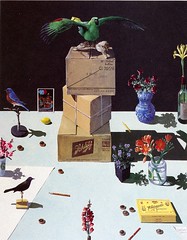
There's lots of other great art in the book. This painting by Paul Wonner is probably my favorite:

Paul Wonner. Dutch Still-life with Stuffed Birds and Chocolates. 1981.

Paul Wonner. Dutch Still-life with Stuffed Birds and Chocolates. 1981.

Contributed to the book courtesy John Berggruen Gallery, San Francisco.


The carnivorous among you (and a certain portion of the anti-carnivorous) may prefer Marianne Boers's still-life with Safeway meats:

Marianne Boers. Safeway Meats. 1973.

Marianne Boers. Safeway Meats. 1973.

Contributed to the book courtesy John Berggruen Gallery, San Francisco.


Her "Royal Baking Powder" (which is not in the book) is a similar work of supermarket photorealism but dark and metallic rather than pastel and fleshy.

There are also over 200 recipes, and they are far more interesting than the type usually found in let's-collect-recipes-from-friends cookbooks. I didn't spot any that appeared to have been lifted from the back of a bag or the side of a can, and a great many of them are inventive and unusual. You are not likely to be served painter Penelope Fried's preparation of mangoes for reflective moments, for example, by anyone but Penelope Fried:

click here to enlarge the recipe and start being reflective

I flagged quite a few recipes I wanted to try. Painter Rooney O'Neill's recipe for penne strascicate appealed to me right away because of its simplicity and reliance on well-chosen ingredients. I also liked her admonition not to serve grated cheese with the dish; it's a sign that the recipe did in fact come from a good, strict Italian cook who is confident in their way with pasta and won't stand for any interference with the flavors they intend it to have.

click here to enlarge the recipe, though you won't be able to see down the painter's blouse


penne strascicate

I am happy to report that the recipe is indeed a keeper; the acidic canned plum tomatoes and the crème fraîche come together beautifully. I used only 1/4 cup of olive oil because I thought any more than that would just end up in little puddles around the edges of the pan. I was also a little concerned that the tomatoes wouldn't break down enough while the sauce was cooking so I took a wooden spoon to the most stubborn ones as they simmered, and by the end of the 30 minutes I had a very nice sauce — fresh-tasting and just rich enough — that didn't need to be puréed.

Gerald Gooch's recipe for creamy sunflower dressing turned me into the sort of hippie who goes and buys a bottle of Bragg's Aminos (not to be confused with Dr. Bronner's, although both have word-soup packaging). There must be some sort gateway hippie substance among the aminos because I am now also happily drinking a little of their apple cider vinegar every day.

click here to enlarge the recipe if you're wearing socks with your sandals


tofu wrap with creamy sunflower dressing 3

This dressing is GOOD. It's creamy and tangy and the flavor is really well-balanced. In the photo above it was used in a baked tofu wrap; it was terrific on simple green salads too. I was suspicious of the recipe because of the water and because it doesn't call for much in the way of spices, but I am definitely going to be making it again often. Maybe it's the serotonin talking, but I think this dressing is good enough to please even people who claim to hate hippie health-food-store type foods. And possibly even children, though I don't have any to test it on. I didn't even use all the oil the recipe calls for (I ran out after 1 1/3 cups) and it was still delicious. I also had no parsley so I used celery leaves instead, and that didn't hurt it at all. Note, however, that the recipe makes an enormous quantity of dressing, so you might want to try halving it, or inviting all the local beard-wearers and spinners of lumpen pottery over to share it with you.

You can buy sprouted sunflower seeds at many health food stores but us hippies like to sprout our own.

soaking sunflower seeds

I used these instructions and while my first batch didn't sprout nicely — a few seeds did but most were duds — the second batch was a success. I think the problem with the first batch was that I didn't drain them well enough, and I put them in the refrigerator too soon. I drained the second batch really, really well, washed and dried the jar, then returned the seeds to the jar and let them sprout in it overnight (in a relatively cool, dark place) before refrigerating them. I was so excited to see that I finally had home-grown sprouts that I forgot to take a photo before I used them in the dressing, but for your edification you should know that they won't get as long as alfalfa sprouts. Their tails are between 1/4" - 1/2" or so. I still don't have a sprouting lid for my glass jar but cheesecloth is a fine substitute.

Gooch's work is worth a look, by the way. There isn't a great deal of it on the internet but there's a sour-faced art critic I'm very fond of, and his Man with a Scarf diptych has its own charms. Here is the man himself posing in front of some palm trees (symbols of "all the pricks in the world").

The most unusual recipe in the book is probably one for escargot à la Cheech and Chong, which includes detailed instructions for building a mesh enclosure to raise healthy snails in one's backyard, and some interesting suggestions on what to feed the captives:

click here to enlarge the image (unless you're a garden narc)

A very close second in the most-unusual category is a recipe called "Imprisoned Eggs for Timothy Leary," which is sort of an IHOP Funny Face for tuned-in adults:

click here to enlarge the recipe and get one step closer to the flowing wet internal cosmos


click here to enlarge the recipe and make eye contact with that plate

The timing is a little odd since Leary had already been released from prison at the time, but apparently cosmic emancipation happens only when one is prepared to realize it.

There's also an unusual recipe for a salmon barbecue buffet. The ingredients and method of preparation aren't very strange — two whole salmon, stuffed with a mixture of mushrooms, bread crumbs, crabmeat and fresh herbs and grilled over hot coals — but the recipe also calls for two small trout to be stuffed and cooked in the same manner as the salmon, and when everything is ready, the fish are to be arranged on large platters in a tableau mort, with the trout clasped in the salmons' mouths, and a cherry tomato in each trout's mouth. An impressive display certain to have any vegetarians at the party clutching their glass of wine just a little more tightly, if they've not already run off into a darkened bedroom to lie down for a while.

As a whole, though, the book features a nice mixture of appealing, very cookable recipes and curiosities that require special plates with eyeballs. Since these were California artists the use of fresh fruits and vegetables throughout the book is of particular interest, and I'd really like to try the loquat pie, persimmon pudding, cold yogurt soup with cucumber, mint and walnuts, and Ansel Adams's sorrel soup. The dessert chapter is by far the most extensive (37 recipes) but the meat and fish chapters are a very close second and third. Abstract expressionists are apparently fond of brooding over long-simmering stews and sauces: oxtail ragout, rabbit braised with rosemary, beef tenderloin Bordelaise.

As for the introduction by James Beard, it was surely a coup for the Museum's Modern Art Council to get him to write it, but unless you are a huge fan of him it's probably not of much interest. It was just a few years before he died and there's a very unflattering photo of him looking jolly and liver-spotted; he made a few interesting points about the importance of having "an aesthetic appreciation of what one sees and eats," but it's a brief introduction and this theme is not developed in great detail.

If you think you might like to buy the book, it is available through my bookshop cheap as chips.

-----------------------------

Previous posts in this series:

New York Entertains by the Junior League of the City of New York

The Single Girl's Cookbook by Helen Gurley Brown

Eggs I Have Known by Corinne Griffith and Cookbook in Solidarity With the Symbionese Liberation Army by Mona Bazaar

Monday, April 13, 2009

Have you seen this woman?

la doña chipotle la doña chipotle la doña chipotle

la doña chipotle la doña chipotle la doña chipotle

la doña chipotle la doña chipotle la doña chipotle mirror image


If you have ever shopped for chipotle peppers in a NYC grocery, you have very likely seen la doña chipotle on an attractive little orange can, hovering over a sea of peppers. But who is she? Is she a renowned cook or a renowned beauty, or both? Is she the CEO's beloved auntie? The peppers are manufactured by La Morena, and their English-language site offers little in the way of history, explaining only that "La Morena products are made in small batches, so you can trust that each and every product will have the same great taste you [have] always trusted." The Spanish-language site (which can be read in both Spanish and English) is a lot fancier and explains that the company began operations in 1969 (when the current owners apparently bought out their former employer), that its name ("the dark one") honors the Virgin of Guadalupe, and that they have grown to have over 1800 employees. It goes on to say that their motto of "quality and tradition" extends to every aspect of their way of doing business (such as contributing to social and humanitarian projects in the community), and that the fact their products are still, after 40 years in business, hand-made according to unchanged traditional recipes is what allows them to offer the best quality, tradition and flavor. It's very nice to know that some companies still believe in these things, but what about la doña chipotle? She resembles the Virgin of Guadalupe to the extent that she has dark hair and her gaze is cast downward, but they're definitely not twins. She looks a bit like Frida, although somehow less likely to have had an affair with Leon Trotsky.

I wrote to the company to ask whether they might tell me something about her, but I didn't hear back from anyone. In some ways this is preferable because it allows me to conclude that la doña chipotle is a reclusive genius. She is perhaps the JD Salinger of the condiment aisle (and accordingly, capable of thrilling neighbors merely by venturing out to do some shopping), or, if you are very hip, its Connie Converse. And like other reclusive geniuses, she has a special something that her rivals just can't compete with (although those in the know might suspect it has something to do with the judicious use of sesame oil).

I very often have a can of the chipotle chiles in adobo my cabinet, but I'd never seen La Morena's "home made style red Mexican sauce" at the grocery until very recently, and the rustic little molcajete and blocky font and folk-art vegetables were irresistible to me.

la morena red mexican sauce

So irresistible, in fact, that it never occurred to me I was simply buying a little can of salsa.

mediocre salsa

It wasn't as good as I'd hoped, but my method of preparing black bean soup — which so far I've made three times this chilly spring, and will likely make again before the weather improves — is quite flexible, and can easily accommodate a few spoons of salsa.

black bean soup

It's not a pretty soup, particularly without a couple cilantro leaves or a few wisps of pickled red onion as a garnish, but the fact that it can be made when the refrigerator is nearly empty and still be a very satisfying dinner is part of its attraction. The key ingredients are the black beans (which take on an incredibly velvety texture when pureed) and a couple of small tortillas (which thicken the soup without making it too dense).

black bean soup
Serves 2 for dinner + some leftover for lunch for one the next day.

2 tablespoons olive oil
2 cloves garlic, finely sliced
1 small onion, finely chopped
1 chipotle pepper in adobo, with a little of the sauce clinging to it (or 2 minced jalapeño peppers if that's what you have)
1 teaspoon ground cumin (preferably freshly ground)
1 generous teaspoon dried Mexican oregano (the one sold by Rancho Gordo is perfect)
2 6" tortillas (preferably corn tortillas, although flour ones work too), sliced in half and then finely sliced into strips
2 to 3 tablespoons salsa (optional)
approximately 2 1/2 cups vegetable stock or water
1 15.5 oz. can black beans, rinsed well under cold running water
a splash of sherry vinegar
freshly ground black pepper and possibly a pinch of salt

also: a hand blender, food processor or blender to puree the soup

Saute the garlic and onion (and the jalapeño peppers if you're using them) in the olive oil over medium to medium-low heat until softened but not browned. Stir in the cumin and oregano and cook for an additional minute, or just until the mixture is very fragrant. Add the tortillas and stir until thoroughly coated in the spice mixture. Stir in the black beans and add the stock or water (and the chipotle pepper and/or salsa if you're using either of those), and simmer approximately 30 minutes. (I make this soup in a 2.25-quart pot and add just enough stock or water to fill it without any danger of bubbling over). After the soup has simmered for 30 minutes or so, puree it in the pot with a hand blender. (If you are using a food processor or blender instead I trust that you know to be very careful about transferring it there and back, and let it cool for a few minutes first). Add a splash of sherry vinegar and some fresh ground black pepper to the pureed soup and taste it for seasoning. Add salt only if necessary.

quesadilla with daikon greens and goat cheese

As long as you'll be using tortillas you might as well make a quesadilla to go with the soup, and we recently had a very un-Mexican but very tasty one made with chopped daikon greens and goat cheese.

IMG_9060


daikon greens and goat cheese

I'd bought daikon for the first time for another recipe and the greens were so nice-looking I didn't want to throw them away. Fortunately they have a great flavor (a little peppery, like watercress) and some health benefits too. You don't need to cook them before using them in a quesadilla; just wash them and chop them into bite-size pieces and mix them with whatever cheese you're using.

Tuesday, February 24, 2009

a mild cake for pleasant dreams


Dream of a Rarebit Fiend (Edwin S. Porter, 1906).


You don't want your bed skittering out from under you, do you? Or chafing dish goblins jumping about your weary head? Then you'd better quit ladling welsh rarebit into your greedy gullet before you tuck in for the night. A small piece of cake with a modest spoonful of chamomile-honey crème anglaise is a more restful little something between dinner and bed.

There are several recipes for chamomile crème anglaise wafting through the internets, but I improvised based on this recipe for a lavender one. I made it with lavender a while back and enjoyed it, and I like that it uses milk rather than half-and-half (or light cream, if you're outside the U.S.). Crème anglaise is basically a cold, thin custard and half-and-half does give it a very nice texture, but this time around I was really just looking for a vehicle for the flavor of chamomile, and milk is fine for that.

As for the cornmeal cake, there are hundreds upon hundreds of different recipes out there and I feel like I've tried maybe a third of them. Some use ground nuts in the batter, some use olive oil rather than butter, some specifically call for polenta rather than cornmeal, etc. I am pretty well settled on the recipe below because the somewhat-scary number of egg yolks give it an amazing texture. It may look a bit bread-y in my photo, but the taste is unmistakably, unequivocally cake.

IMG_9044

The original recipe for the cake is here. I haven't changed anything about the cake itself; I only fiddled with the syrup. I did rewrite the directions because you definitely don't need to use an electric mixer. The rosemary syrup is really good, though, so do try it some time. The honey syrup I replaced it with is not absolutely necessary, and if you don't want to go buy a bottle of honey liqueur I suppose you could try a simple syrup of 2 tablespoons honey and 2 tablespoons water, heated just until runny.

cornmeal cake with honey syrup

8 servings

cake:
1 stick (1/2 cup) unsalted butter, softened
1 cup sugar
1 cup yellow cornmeal [the best quality you can get your hands on, hopefully Anson Mills; the texture really does make a difference]
3/4 cup all-purpose flour
1 teaspoon baking powder
3/4 teaspoon salt
2 large eggs
1 large egg yolk
2/3 cup milk

honey syrup:
3 tablespoons honey liqueur (I used Bärenjäger)
1 tablespoon mild honey, such as clover

Preheat the oven to 350°F, with the rack positioned in the center. Generously butter an 8- by 2-inch round cake pan. (Possibly I am just paranoid after a bad experience with a sticky cake around Christmas time, but I used nearly a tablespoon of butter for the pan. We're fat now but the cake didn't stick.) Once the pan is buttered, give it a very light dusting of flour (i.e., put a tablespoon or so of flour in your smallest mesh sieve and tap that about over the pan, working fast, so that the entire interior surface is evenly but very lightly coated).

In a large bowl, beat the butter and sugar with a pastry blender "until light and fluffy." This is a standard phrase in cake recipes and I've always understood it to mean that the butter and sugar need to be thoroughly integrated, with no visible streaks of either remaining in the bowl:

IMG_9020

Add the remaining cake ingredients and beat everything together until thoroughly combined into a pale yellow batter.

Pour the batter into the pan and bake for 40 minutes. (The original recipe says to bake it "until a tester comes out with a few crumbs adhering.")

Cool the cake in its pan on a rack for 10 minutes.

While the cake is cooling, heat the honey liqueur and the honey in a small saucepan (preferably one with a spout for pouring) just until warmed through and very runny.

Invert the cake onto a plate and, while it is still warm, pour the honey syrup evenly over the surface. I've been keeping the cake at room temperature and I'm convinced the small amount of alcohol kills all cooties, but you can refrigerate it if you're nervous.

chamomile-honey crème anglaise

2 cups milk
4 egg yolks
1/2 cup mild honey (I used raw clover honey)
3 chamomile tea bags, or the equivalent amount of loose chamomile tea

Heat the milk and the chamomile tea bags (or loose tea) in a heavy saucepan over medium heat until the milk starts to bubble around the edges of the pan. (A heavy pan — such as enameled cast iron — is ideal because milk can easily get too hot too fast in a cheapo pan). Turn the heat off and let the chamomile steep in the warm milk for approximately 20 minutes.

After 20 minutes or so, heat the milk again over medium heat. If it appears to have reduced quite a bit since the first time around, you can add a splash more to the pan.

While the milk is heating a second time, whisk the egg yolks and the honey together until they are very thoroughly blended.

Remove the tea bags from the pan. (If you've used loose tea, leave it in, and see note below about straining).

Once the milk has again started to bubble at the edges, whisk 1/2 cup of it into the egg yolk and honey mixture. Whisk constantly but not too vigorously; the purpose of this step is to get the egg yolk mixture acclimated to the temperature of the milk, not to get it to change texture. Pour the egg yolk mixture into the pan and keep whisking for approximately one minute, or until the mixture thickens slightly. "Slightly" is all you're looking for: Once it is thick enough to coat the back of a spoon, it's done, and you can take the pan off the heat. Transfer the crème anglaise to a bowl or pitcher and refrigerate until chilled. (If you have used loose chamomile, now is the time for you to pass the crème anglaise through a mesh sieve). It will taste just as good, if not better, the next day. If a skin has formed on the surface of the crème anglaise while chilling, remove it with a spoon before serving.

If you think the cake will be too naked with just a little crème anglaise on it, I think a spoonful of sautéed apples (maybe with a little honey, fresh thyme, and lemon juice?) would be nice on the plate. Fresh berries would work too. Candied walnuts or pecans wouldn't be out of place either.

Sunday, February 15, 2009

breakfast of underemployed champions

several generations of horticultural enthusiasts and still no tea and toast bush . . .

"And Bread-and-Butter-Cups (Fresh Every Morning)" by Walter Crane, from an unpublished children's book. Found at
the Beinecke Rare Book and Manuscript Library
, Yale University.


It's been a while! A few months isn't an especially long time in human years, but in blog years I suppose I've popped my clogs and been resurrected. Go ahead and cancel the arrangement of mourning flowers you ordered and put your black veil away; we're going to bake some bread.

I've made the walnut bread below three times since the recipe appeared in the Guardian in early January, making small changes each time depending on mood and kitchen inventory. I've not baked much in the past apart from quick-and-easy stuff like biscuits and muffins, in part because there's so much that can go wrong with a proper loaf. It's such a disappointment to spend all afternoon kneading and waiting and end up with something fit only for a duck's breakfast. I've found this dough a lot more pleasant to work with than the earnest hippie whole wheat bombs I've struggled with in the past. Is it the generous measure of warm milk? The way the warm milk and warm bowl help the yeast along? I can't say. It just works.

date and walnut bread


____________ and walnut bread

[Hugh Fearnley-Whittingstall's recipe is titled fig and walnut bread, but I keep making it with anything but figs. I've not changed anything else about the recipe because it's pretty much perfect as-is, but I have made notes in brackets.]

850g strong bread flour, plus extra for dusting
7g sachet dry active yeast
2-3 tsp fine-ground salt
450ml whole milk
100ml water
60g unsalted butter, cut into small pieces
2 tbsp honey [maple syrup works well too]
150g dried figs, soaked overnight in enough hot tea to cover, then drained and roughly chopped [I have used both dates and golden raisins with very good results. Neither need to be soaked more than 15 minutes. I've also used a combination of grated zucchini and blanched grated carrot, both of which should be drained well rather than soaked in anything.]
150g walnuts, roughly chopped

In a large, warmed mixing bowl, combine the flour, yeast and salt. In a saucepan, heat the milk, water, butter and honey [or maple syrup] to blood temperature, allowing the butter to melt, then add to the bowl. Mix with one hand to form a rough dough, then turn out on to a work surface and knead until soft, velvety and elastic, about 10 minutes. Shape into a tight ball, coat lightly with flour all over and place in a bowl. Cover with clingfilm or a plastic bag, and leave to rise in a warm place for an hour or so until doubled in size.

Turn the risen dough out on to a floured surface and press it gently into a rectangle. Combine the figs and walnuts in a bowl, scatter over the dough and roll up. Knead until thoroughly amalgamated and divide in two. On a lightly floured surface, shape each half into a ball, press into a flat disc, and roll up tightly to make a nice, even loaf shape. [Of course you can shape all or part of the dough into small rolls; they'll take a total of approximately 20 minutes to bake.] Smooth the ends under tightly, dust all over with flour, then leave to rise again, covered, on a floured tea towel or wooden board until almost doubled in size.

While the dough is rising, turn the oven to its highest setting. [I don't go any higher than 450 F because my small apartment gets far too warm.] Put in a large baking tray to heat up, and put a roasting tin on the oven floor. Boil the kettle. [Not necessary; keep reading.] When your loaves are risen, remove the tray from the oven, put the loaves on it, cut three parallel slashes into the top of each loaf and return to the oven. Pour half a kettleful of boiling water into the roasting tin and quickly close the door. [I don't bother boiling the water. Instead I simply add a roasting pan filled with an inch and a half of hot water from the tap at the same time I put the bread in. I put it on a shelf arranged just below the one the bread is on and that works very well for me.] After 10 minutes, turn down the heat to 190C/375F/gas mark 5 and bake for a further 20-30 minutes, until the loaves sound hollow when tapped on the base. Leave on a rack to cool completely before slicing.

date and walnut toast


breakfast tea for underemployed persons

This one is all me. I have no idea whether Mr. Fearnley-Whittingstall drinks at breakfast but I can assure you, it's not shameful unless there's something slovenly about your bearing.

Serves 1.

1 tablespoon muscovado or dark brown sugar
juice of half a lemon
1 to 2 shots of good dark rum (depending on mood and schedule and size of cup)
Lapsang Souchong tea (bagged or loose tea, up to you)
enough freshly boiled water to fill your insulated sippy cup

The sugar and lemon juice go in the cup first. Stir until the sugar is beginning to dissolve; then add the rum and the tea. (Obviously use some type of strainer if you are a loose tea person). Then the hot water. Give it a good stir and put the lid right on so it stays nice and hot for the rest of the morning.

breakfast of underemployed champions